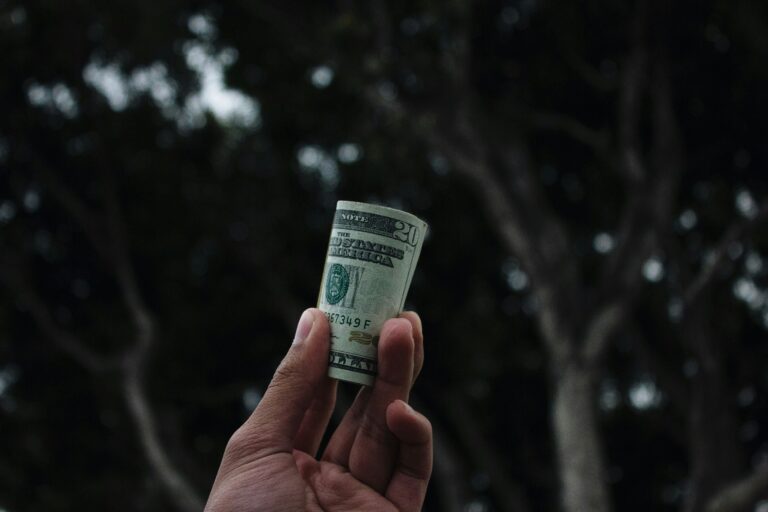

$300 Million Sounds Like a Lot, But Why Does It Feel Like It’s Not Enough?
Why Does Wealth Feel Different for Everyone?

Have you ever heard or seen a video depicting a scenario where a bicycle owner looks at a motorcycle owner and thinks, “When can I afford a motorcycle like theirs?” Meanwhile, the motorcycle owner sees a car owner and wonders, “When can I buy a car like that?” Many people constantly look at what others have, muttering to themselves about when they’ll be able to afford the same things.
This cycle continues until they forget that what they already have is something others dream of. This mindset can quickly erode a person’s sense of wealth by comparing their possessions to others’. From this, we can conclude that wealth is relative. This is a concept that resonates with many, and even the wealthy may question their financial status when they see others’ riches.
Let me ask you: Is $300 million a lot to you? Enough? Or too little? Your answer will likely depend on your current situation because wealth is relative. Factors like social background, needs, lifestyle, or previous income often shape how we view whether the money we have is sufficient. Personally, I believe “a little doesn’t always mean lacking, and a lot doesn’t always mean enough.”
More Money, More Spending: Are You Richer or Just Raising Your Standards?
We know that when we have more money, we’re tempted to buy things we couldn’t afford before—sometimes items that aren’t very practical or, even if they are, we rarely use them. Things we initially think will be useful, make us happy, or bring comfort often provide only fleeting satisfaction. The next day, we’re already chasing something else because the previous purchase has lost its appeal. This is called the hedonic treadmill, a psychological concept where the joy from new things fades quickly, leaving us craving something else.
External factors, like our environment, also influence lifestyle choices. When someone decides to upgrade their lifestyle—buying the latest car, chasing designer bags, or dining at fancy restaurants—I guarantee they’ll be reluctant to lower their standards. Even if they run out of money, they might resort to credit cards. They’ll do whatever it takes to satisfy their ego, desires, and need for status.
On another note, I came across data from the latest Charles Schwab Modern Wealth Survey, which states that the threshold for feeling wealthy is now $300,000, up from $2.2 million in 2023 to $2.5 million in 2024—a significant jump.
Interestingly, the amount needed to feel financially secure and comfortable dropped from $1 million to $778,000. This is a fascinating contrast. We know that feeling comfortable is fairly ordinary; it’s something we might consider a basic human right—financial comfort. But being wealthy? That’s a different story.
This shift is more than just numbers. It reflects human psychology—particularly our collective obsession with money and status. Ever heard of the Goldilocks nation? They’re the ones endlessly searching for the “just right” definition of wealth. This is the effect of the hedonic treadmill, where we quickly adapt to new achievements only to chase the next source of happiness. In this case, our definition of financial happiness keeps rising, making it hard to feel satisfied.
Now, let’s consider a global perspective. While we debate whether $2.5 million is enough to be considered wealthy, nearly half the world’s population lives on less than $5.50 a day. This raises a profound question: Have we lost our common sense, or just our sense of proportion?
Regional differences highlight this absurdity even more. In San Francisco, the threshold for being wealthy is $4.4 million—almost double the national average. In New York, it’s $2.9 million. So, does this mean we’re actually getting richer? This phenomenon isn’t just a statistical anomaly—it’s real and visible in everyday life.
Wealth and Burden: Two Sides of the Same Coin?
Back in 2018, I worked as a property manager for a resort in Miami that catered to wealthy clients. My job involved arranging everything from concierge services to keeping their private villas in pristine condition. One of our regular guests, let’s call him Elisha, was a tech entrepreneur from Silicon Valley who had recently sold his company for billions of dollars.
Elisha was known for being a perfectionist but also generous with the staff. He always talked about big things—investments, philanthropy, tech innovations—but one sunny July morning, he came to my office with an unusual expression.
His voice was heavy. “I need your opinion.”
I nodded politely. “Of course, Elisha. How can I help?”
He handed me his iPad, the screen displaying images of two stunning yachts. One was a 150-foot futuristic design, while the other was a classic 180-foot vessel with teak decks and a jacuzzi on every level.
“I’m not sure which one to pick,” he said, his face full of doubt.
I stared at the screen, trying to process the situation. “They both look incredible, Elisha.”
He let out a long sigh and sat down across from my desk. “The problem is, the bigger yacht means I’d have to build a new dock at my Bahamas villa. That’ll take months. But if I go with the smaller one, it’s not enough for our annual summer event. My friends expect something… more impressive.”
I struggled to keep my expression neutral. He was genuinely worried. This was a real dilemma for him, something that seemed to disrupt his balance.
“And don’t forget,” he added, “I still need to replace my helicopter. The current model is too small to carry more than six people.”
I could only nod and offer some neutral comments about practicality. This moment underscored a key point about the perception of wealth: it’s all relative. It also made me reflect on how far removed Elisha’s priorities were from ordinary life.
From this, I drew an important lesson: a person’s biggest problems often match their world. For Elisha, the pressure to stay at the top of his social circle was as real and heavy as someone struggling to meet basic needs.
Wealth can indeed make life easier, but it never fully eliminates stress. Sometimes, it just replaces it with more complex, harder-to-understand worries.
Simple, Yet Something Us Lower-Middle-Class Folks Can Enjoy
For those of us from lower-middle-class backgrounds, wealth might look different. I grew up in a rural area where wealth meant being able to provide a decent education through high school—or, if you were lucky, college. It meant having a reliable vehicle for short or long trips and ensuring your family could eat three meals a day without worry.
My perception of wealth changed when I moved to the U.S. for work. I encountered so many differences—people with universal markers of wealth like shiny cars, vacuum cleaners, air conditioning in every room. They casually discussed investments and real estate as if it were part of daily life. When I arrived, I felt like an outsider; everyone seemed to have everything.
But reality hit hard. My first day in the U.S., I started as a waiter in a restaurant, working long hours just to afford food and rent. I shared an apartment with roommates to save money. Luckily, I found friends who shared both the joys and struggles.
We’d swap stories, share our dreams, and whisper our belief that tomorrow would bring those dreams closer. For over a year, I saved, worked, and lived frugally. Slowly, things changed. I could afford my own apartment—nothing fancy, no different from the shared one, but it felt like staying at an Aman Resort.
Years later, I started a small food truck business. I faced plenty of ups and downs, but I’m still running it, though I’m no longer the one working the truck. The best part? Today, I feel more successful than I ever imagined. I may not have a mansion or a sports car, but I have a growing business and more choices in shaping my life.
Are We Truly Building a Life?
Some questions we often overlook: What is wealth, really? Is it about the balance in your bank account? Social recognition? Lifestyle? Or is it the peace of waking up without burdens and living with the ability to fulfill your needs or desires?
For me, wealth is buying a simple apartment to live alone, gaining the privacy that feels more dignified than sharing a place with others.
The truth is, everyone’s definition of wealth is different and evolves over time. I might feel wealthier than my past self, but the finish line of wealth seems to keep moving forward.
What if we adopted a new perspective on wealth, one that goes beyond dollar amounts? Instead of asking, “How much money makes me rich?” maybe we should ask, “What kind of life do I want to live, and how much does it cost?”
You’ve probably heard of this approach—the “life satisfaction index,” which considers elements like balance, happiness, and emotional connections. After all, what’s the point of sleeping in a mansion if it comes with stress, loneliness, and relentless exhaustion?
An old friend, Daniel, had it all—a big house, a successful business, a vast network. But every time we met, he talked about how tired and empty his life felt. His wealth couldn’t buy the time or true happiness he sought.
In conclusion, instead of chasing a definition of success dictated by the outside world, maybe it’s time we craft our own, more authentic version of success. It’s not about how far we go, but whether those steps lead us to the life we truly want.