Why I Left Substack for Ghost in 2025 (And Saved $6,000)
I’ve always loved the thrill of hitting “publish” and watching my words find their way to readers. For a while, Substack was my go-to—simple, elegant, and quick to get newsletters out. But the deeper I got into writing, the more I felt stifled. The 10% cut from every subscription dollar, rigid templates, and the sense that my work lived on someone else’s land—it all started to weigh me down. I wanted more control, more freedom, and honestly, a better deal. Then I found Ghost, and everything changed. Here’s why I switched—and why you might want to consider it too.
The Money Trap That Woke Me Up
Let’s talk numbers, because they hit hard. I was thrilled when my newsletter started growing—from 50 subscribers to 100, then 500. At $10 per month per subscriber, that’s $5,000 a month, or $60,000 a year. Sounds great, right? But Substack takes 10% of that, meaning $6,000 a year goes straight to them. That’s a new laptop, a few months’ rent, or a chunk of student loan payments (because yeah, those are real for me and most people I know). According to the U.S. Census Bureau, the median household income in 2024 was about $81,000. Handing over nearly a tenth of that to a platform? It stings.
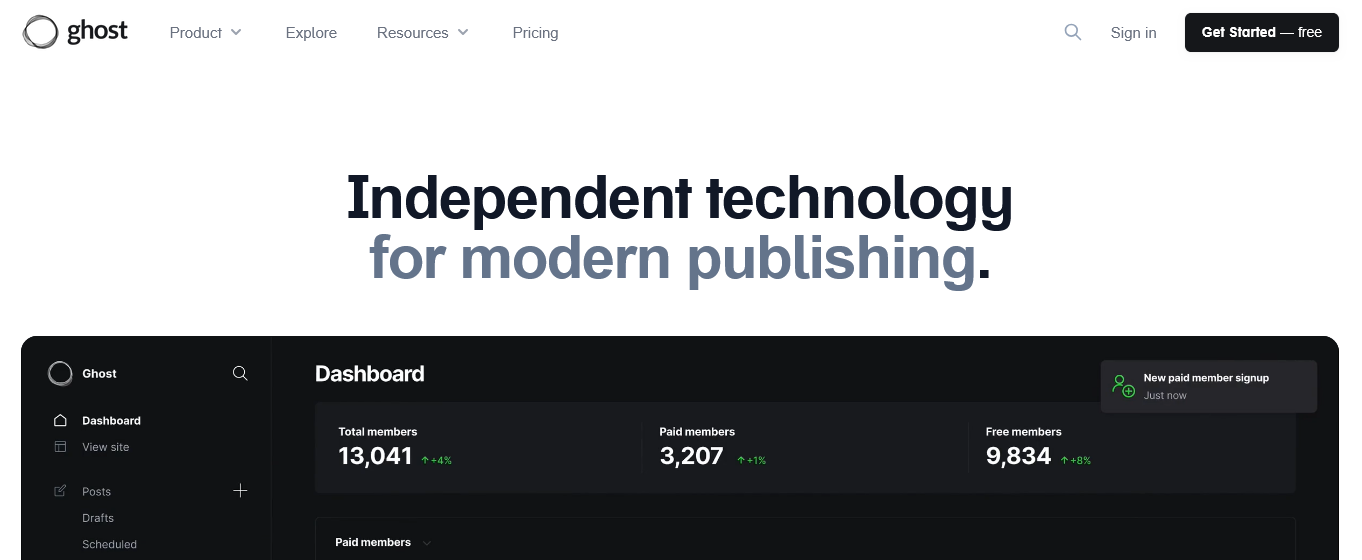
Ghost flips the script. For just $9–$11 a month, depending on the plan, I keep all my subscription revenue, minus standard Stripe processing fees (about 2.9% + 30 cents per transaction, per Stripe’s 2025 pricing). With $60,000 a year in earnings, I save over $5,500 compared to Substack. Suddenly, I’m not just writing to scrape by—I’m building something sustainable. For someone in a city where half my paycheck goes to rent, that’s not just a number. It’s breathing room.
Owning My Work, My Way
Simple is nice, until you realize you’re living in someone else’s walled garden. Your newsletter sits on a substack.com domain, and design options? Basically, “pick a template and deal with it.” I wanted my work to feel mine—a space that reflects my voice, not Substack’s branding. Ghost delivers that. I bought my own domain (no extra cost), picked a theme that fits my style, and customized everything—from the landing page to emails to the site’s look. It’s like moving from a rented apartment to a house you can paint any color you want.
The flexibility is unreal. Since Ghost is open-source, I can tweak the code myself (or hire someone on the cheap). Compare that to Substack’s cookie-cutter design constraints. In a crowded digital world—where 80% of Americans consume online content daily, per Pew Research’s 2024 findings—standing out is everything.
Tools That Grow With You
Ghost isn’t just a newsletter platform; it’s a full-on publishing machine. It’s got blogs, subscription systems, membership tiers, and built-in SEO tools. The Markdown editor makes it easy to embed images, audio, even video, without a fuss. Automatic sitemaps and metadata help Google find my work—which matters, since 65% of web traffic comes from search engines, according to HubSpot’s 2025 report. I can set up free, monthly, or yearly tiers for readers, and integrations with Stripe, Zapier, and Unsplash keep things seamless.
Substack’s editor is user-friendly but bare-bones. Ghost feels built for writers who want to level up—building a brand, a community, even a business. Whether I’m sending newsletters or creating a full-blown site, Ghost has my back.
The Downsides?
Let’s be real—Ghost isn’t perfect. Setup takes more effort than Substack’s plug-and-play vibe. If you’re self-hosting or tweaking themes, expect to invest some time. I spent a full weekend getting my site right, and I’m no tech wizard. Mobile editing is also clunky. Substack’s app lets you write from your phone easily; Ghost lags there. If you’re always working from your phone, that could be a pain.
But for me, the trade-offs are worth it. Ghost’s team offers free migration from Substack, which saved me a ton of time and stress. I started with their $11/month Starter plan, imported my subscriber list, and was up and running in a week.
Real-World Proof
I’m not alone in making the switch. Writers like Casey Newton, who runs the tech newsletter Platformer, ditched Substack for Ghost and praised its control over branding and revenue, per a 2024 Verge article. Uri Bram of The Browser called Ghost’s editor a customization haven. Even Yanyi, a writer focused on community and independence, cited Ghost’s open-source philosophy as a key reason for switching. These aren’t hobbyist writers—they’re building careers, and Ghost lets them do it on their terms.
Should You Switch?
If you’re just starting out, Substack’s simplicity might be enough. It’s like training wheels—great for learning. But if you’re serious about writing, want a brand that’s truly yours, and don’t want to keep handing over 10% of your income, Ghost is hard to beat. You can start with the Starter plan, grab a domain, and test the waters. Or run both platforms during a transition—I did that for a month to ease my nerves.
The Big Picture
Switching to Ghost felt like reclaiming a piece of my work I’d quietly given away. In a world where everything—rent, groceries, gas—feels increasingly suffocating, keeping more of what I earn and building something I truly own is a quiet act of rebellion. Ghost isn’t just a platform; it’s a way to write with full control, to tell stories without someone else’s logo in the corner of the screen. If you’re ready to take that step, this might be the freedom you’ve been looking for.